Tuesday, June 5, 2012

life is to short...


Life is too short.
   “Life is too short to be living somebody else´s dream” Hugh Hefner
      “Life is too short to be vengeful or malicious.” Phillips Brooks
Life is too short.
From what I have learned this year, the quotes above are clichés. But a cliché is given the name of a cliché because it has been over used.  Some thing is used a lot because people like it or identify with it. Surely, “life is too short…” is a line that people identify with it. 

When describing Melania, Marco Polo talks a city filled with dialogue. Non-stop dialogue. When people die, the dialogue does not die with them. Instead, others replace their roles. It happens on a regular basis. So the dialogue is more important than the people. He ends the description of the city with the following line:
   “even if the lives of Melania´s inhabitants are too short for them to realize.” (pg. 22)

After reading that I truly understood the meaning behind the cliché. I have always heard people saying, especially older people, that are “wiser” because they have lived more.

I mean, how can life be short if many people live around 70 to 80 years? There are 365 days in a year, 24 hours in a day, 60 minutes in an hour, and so on. If we make the calculations, we would end up with an enormous amount of seconds. Still after reading how fast the people of Melania are forgotten, or how easy it is for them to be of no importance I understood the cliché: “life is too short.”

In numbers, life is long but (to use another cliché) it can pass “in a blink of an eye,” because many say that “time flies when you are having fun”. (Ok. Enough clichés)

It does not matter how short or long your life is, but you only have one and you have to make it count. My sister graduated form school this year and will be leaving in less than two months. Two years ago, I could not imagine that happening, but it will. Before I know, I will be the one leaving to study, and every second that passes, I have to make them count, because if not, I will be replaced just like Melania´s inhabitants.
Profits and Money


Marco Polo describes Olivia as a “city rich in products and in profits” (16) A city filled with fine palaces, and a lot of ornaments but at the same time it is covered by dark materials and grease. The cultural aspects are somewhat similar. It is known to be a calm city, but occasionally some one crack a laugh and jokes and sarcasm fill the city. 
On the cultural and physical aspects, there seems to be a clash, but it appears to be as if the inhabitants were trying to maintain a balance.
Marco Polo starts by describing a city which one imagines being wonderful. For the people who desire money and wealth, that is the place to go, but then that imaged is ruined because it is “shrouded in a cloud of soot and grease tat sticks to the house…” (pg 16) Who would want to live in a place like that?

Yet, you see it happening very often. Now-a-days people would do anything for money. The culture has evolved into one that revolves around wealth and power. Today, in order to be important, you have to have money or do some thing extraordinary. But to do some thing extraordinary, you have to have money, so it all goes back to wealth.  It is vital to mention, that money is not only a desire. It has become a need. Commodities are something every body would want to have, but that is not what money means. People with money to spare, do have commodities, but the majority of the people, need the money simply to survive.

I don´t know where this culture is going to take us but maybe it would be good to follow Khans advice: “my empire has grown too far towards the outside. It is time for it to grow within itself.” (pg.19) Money will always be a necessity in life, but it does not have to be the most important one.  Just like in Olivia, there should be occasional jokes that would break the importance of money and let other things come in. 

Sunday, June 3, 2012

Life´s Things


The table of contents of the book is different from all. The way the chapters are arranged suggest that there are many ways to read the book. On can read the different cities and ____ (for example Cities and Memory) in order or by blocks, starting fro the end. I choose to read the book in page order.

Since I already new that the empire symbolized the life of the reader, it seemed obvious that the cities meant something, related to life.  An option could be the events that happen in one´s life or the essential things to one life. I kept on reader with this in mind and connected that with the description of each city.  

The following descriptions have been introduced: memory, desire signs, thin, trading, and eyes. These words follow the word “city” or go before it, in the name of each chapter.

Anastasia is the second city of “Cities and Desire.” Even though Marco Polo says that the description awakens desire, truly “you believe you are enjoying Anastasia wholly when you are only it´s slave.” (Pg. 12) I would say that this would be a good definition of many events in live. You may believe that you are enjoying every thing you do in life, but truly you do not have a choice. Take school or any form of education as an example.  You may have fun at school, and like being with your friends and even learning, but you don´t have the option of choosing whether you want it or not. You have to go to school, not only because your parents force you to, but also because, with out an education it is very unlikely to succeed in life.

The most obvious of all is “cities and memory.” Life is based on memories and past events.  Human beings mostly act and make decisions based of the events of the past. When I cook a cake for the first time, and it burns, the next time I cook it, I would remember this time and put the oven less hot.
One of the cities that confused me was “Thin Cities.” I could not think of something essential that could be represented by the word thin, but after reading more “Thin cities,” I noticed a trend in the description of these. In all, Marco Polo mentioned the water, and the importance to the city.  Valdrada is on of these and actually there are two Valdrada. Since the city was built next to a body of water, every thing is reflected upon it, creating the second Valdrada.  Since all had to do with water, this could only mean that “Thin Cities” are responsible for symbolizing the need of water. With out water, nothing of earth would survive.


The Irony of Calvino


In class, we read the fifth page of Italo Calvino´s Invisible Cities and concluded the following:

  • ·      Kublain Khan stands for power
  • ·      Marco Polo stands for knowledge
  • ·      Khan´s empire stands for the life of each individual


Going further on, we concluded that the reader is Khan and the writer is Marco Polo. We are the readers, I am khan, and as I am reading, the writer Marco Polo is feading me with knowledge. The knowledge he was recollected through out his expeditions through Khan´s Empire.

As I continued reading the book, I noticed that there was it did not have a story plot. Every chapter accounts for a new city that Marco Polo is describing. The methods of description are very similar to Hemingway´s. He states the facts of the cities, what he saw, but he leaves his feelings aside. He tells Khan what is special about each city, but leaves him (and us) to feel what we want about the cities.

All of the descriptions of the cities got me thinking about the title of the book. Invisible Cities. Can this be possible? The title is ironic. A city is composed of elements: roads, building, forests, cars, schools, houses, ext. All of these things can be evoked by the 5 senses; therefore they are not invisible.  In page 10, Marco Polo defines what cities consists of “of relationships between the measurements of its spaces and the events of it´s past.”

Another irony present in the book is the empire. It is huge, made up of many cities and all is under the power of one man: Kahn. If one is the ruler of something he or she should know everything that has to do with it. Yet, Kahn does not even know all the languages: “the emperor  is he who is foreigner to each of his subjects…” (page 21) 

Tuesday, May 15, 2012

The Power of the Kind (but not naive)


“Nice guys finish first?” In fact, I believe they do. But the key word in that sentence is guys, because even though Dawkins mentions animals and examples of Prisoner´s Dilemma, that phrase only applies to human beings. Reason being there are many other factors that affect the game. The life of humans is not programmed inside a computer: it is not based on rules.

In the real world, a nice guy is most likely to survive than a nasty person. But the nice guy has to be intelligent enough and not let others fool him. The nice guy would be the one to survive because most people tend to like him, while the nasty guy is hated by most. A nice guy is friendly with another nice guy, but a nasty guy is not friendly with another nasty guy. Also culture, society and religion tend to accept the behavior of the nice guy. The Ten Commandments many have to do with nice and forgiving actions. Few people are going to be nice to a person that treats them bad. Why would I give candy to some one that did not give me candy? But that is were forgiving becomes essential. If deny the candy because it was denied to me then that person most certainly will deny be again in the future. But if I give, regardless if I was denied or not, the other persons perception could change. Most of the human population goes by the strategy “Tit for Tat,” basing their actions upon the actions of others. It is very likely that a “defect-defect” line will form because there are some nasty people, but it takes the kindness and forgiveness of just one to break that line. 

Another very interesting example that Dawkins gave was the “live-and-let-live,” that Germans and British troops applied during some part of the First World War. He mentioned that once “at Christmas British and German troops briefly fraternized and drank together in no-ma´s-land.” (Page 225) This remained me of the movie War Horse, also set in World War One. In the midst of the war, a horse sprinted through no-man´s-land between a British and a German fort. The field was field with a lot of barbed wire and the horse eventually got stuck and could not move. Upon the scene, a British soldier raised a white flag and risked his life to save the horse´s. He got to the horse and could not figure out were to start, and then a German soldier came out to help his “enemy” save the horse. Together they were able to save it, and when the job was done, they even shacked hands. This is a clear example of “nonzero sum game.” Neither of them lost and they even felt like they won something.

To end this, I believe that this shows that even though genes may be selfish, human beings are not. The population may be divided be varied opinions and cultures, but a the end, it takes a random situation to end disputes.


Sunday, May 13, 2012

Genes then Memes


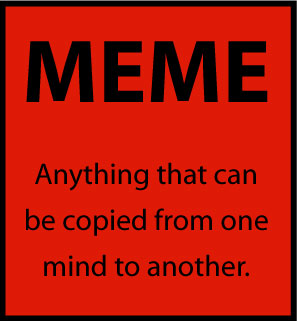
According to Dawkins, genes are replicators. DNA has existed millions of years ago and their function it to reproduce so that they can be passed on to other organisms. This is nature´s way of ensuring the life and survival of the organisms on the planet. Further on in his reading he mentioned another type of replicator that has appeared: the “meme.”  To summarize what he said, meme are the genes of culture. It´s is his way of explaining how one person takes in everything that is around him or her. This is something I strongly agree with. People are born with their unique genetic make-up that builds them up. During the years the traits start to appear and one can see the resemblance the off spring has with the parents that conceived him. As well as physical traits, some personality traits can also be inherited. After the genes comes the memes. Thanks to this replicator, humans are able to learn new languages, play an instrument, and learn a song. Also, the memes are the ones that enables someone to leave their mark on the planet. The whole world will always remember Leonardo Da Vinci for his sculpture “The David,” or Jose Mourihno for winning four major leagues in 4 different countries. This is all part of the human culture that memes replicate and make every body aware. Richard Dawkins also mentions that one-day memes will take over genes, but this is physically impossible. A replicator of culture cannot replace the replicator of life. With put genes, memes would not have work to do; they would not have culture to transmit because not life would exist. Genes will exist forever or until or the organisms become exist, because they are the building blocks of life. 

Sex: Reproduction or Pleasure?


In chapter 10, Dawkins explained the basic behavior of ants of bees that are part of the group of “social insects.” He gave a very thorough explanation of how this community of “social insects” functions. There are two types of insects, like two social classes. The most important is the queen and then there´s the workers. The role of the workers is to keep the community going and to satisfy the queen. (By satisfy I don´t mean like presents or massages, just feed her and keep her alive.) The role of the queen is to live and reproduce herself. One of the most interesting things is the way she reproduces herself. Instead of mating with a male each time she wants to reproduce, she does it only ones and stores the sperm of the mate, to be used further one. In this community of insects, sex is only used for reproduction. That is the main reason why insects and animal mate, with the exception of humans.  Even though the main purpose of sex in humans is also reproduction, many do it for pleasure. This is why condoms, anti-conceptive or many other prevention methods exist. Many happy couples of single people want to have sex in order to reproduce and have a baby but most of the people today, want to have sex in order to entertain themselves. I don´t know it that is a sign of intelligence or stupidity but people could argue both. A stronger believer in the first option would say that humans are more intelligent because they have discovered other things that sex can offer. A believer of the latter can argue and say that it is not an intelligent thing to do because thanks to unprotected sex and the wild imagination of humans many people have died. To make myself clear, through sex one can get many diseases that can end up killing a person. If the companion is not a known person, the stakes of this occurring are very high. Is it worth it risking one´s health for the “pleasure and entertainment” of one night? 

If We Inherited Traits...


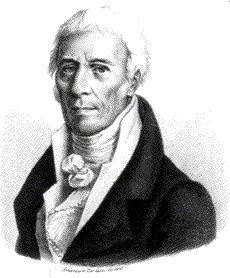
First I would like to start by giving the definition of the word “gene” just as Richard Dawkins described it in his book. He uses the definition of G.C Williams and it goes as follows: “any portion of chromosomal material that potentially last for enough generations to serve as a unit of natural selection. “  (Pg. 28) Genes are the ones that enable any organism to live, survive and evolve. They are one of the most important parts of natural selection, because without genes, nothing will be passed on. Now, what exactly do genes pass on? Dawkins mentions that” each new generation starts from scratch.“ (pg 23) By this we can conclude that Lamarck’s theory of inheritance of acquired traits is false. The genes carry physical characteristics such as hair or eye color, but what a human being acquires during his or her life time, is not passed on to the off springs. This does not happen in human or any other organism of the planet. But this is not news to anybody. Lamarck´s theory was disproven long ago by Darwin´s theory of evolution. Never the less it popped some questions in my head. What would happen if we did in fact inherit the traits that our parents acquired during their lifetime? In some cases this could be good, but in others it couldn´t. One clear example is the loss of a limb. Let´s say that a mother had an addiction to heroin, and one time, the needle that she used was infected and her arm had to be cut off. It would be very awful if the off spring had to suffer the consequences of the mother´s action and be born without an arm. In other cases, it would not be that tragic. For instance, let’s say that the father developed diabetes when he was young. Fortunately the doctors were able to cure him, but this is a disease that is inherited. It would be great that because the father was cured, then the off spring would not have the diseases. This would be a great consequence of inheritance of traits, but in my opinion, if this were to happen, much more negative traits would be inherited that positive. I really like that all the generations can start from scratch, because it give them the opportunity to build the life they want.  

Monday, May 7, 2012

The Survival of The Capable Replicators


In the second chapter of The Selfish Gene, Dawkins introduces genes as replicators. He based his explanation on an experiment that was conducted, where scientist created the environment they believe existed in earth, before life.  They put together water, carbon dioxide, methane and ammonia. Then they introduced an energy source such as electric sparks or ultraviolet light. These conditions may not be the ones found in earth pre-life, but it is was it seems like, so scientist used those. A few weeks after putting everything together, they observed that new molecules had been created, and laid in a small, liquid, muddy-like substance. Out of those molecules, the replicator, was the one that stood out, thanks to it´s special “power” of being able to replicate itself. He then goes on to tell how this replicator was the one that enabled other molecules to make more copies of them. Some of the copies were identical, but other were similar, because the replicator was bound to create mistakes.

When I hear the word mistake, it creates a negative connotation. But just as Dawkins explains, a mistake can happen for good. Even though some could argue that mistakes occur when something goes wrong, the result of it may be possible. This is exactly what happens when replicators make mistakes. The changes in those copies are the ones that make evolution possible, and with evolution come the survival of the species. This is all relates with Charles´s Darwin theory of natural selection and the survival of the fittest. The species-in this case molecules- that are capable of changing and adapting, are the ones that survive.

During the industrial era in the Unites States, (late 19th century) William Graham Summer popularized a philosophy that relates to Darwin´s “survival of the fittest.” It did not have to do with the survival or extinction of a species, but more of human beings as individuals. The philosophy was developed by Herbert Spencer, and is called “Social Darwinism.” It has the same base of “the survival of the fittest,” but it embarks the social society. The United States was going though an era of technological and economical advancements, where top gun guys, such as Andre Carnegie and John D. Rockefeller started to emerge. To justify the wide gap between the rich and the poor, many used Social Darwinism and argued that only the strongest are and should be able to over come the economic situations, and should not need assistance. In this way, the most capable people will survive, and will be the one to develop the economy and the country.

The survival of the best replicators is very similar to the survival of the most capable citizens. If both are able to survive, it is because they have fought for it and have proven to be the strongest. Hence, life or the country will have been left in charge of the ones that will not let it fail. 

Sunday, February 26, 2012

And at the End...


As I finished the book, the last sentence “´That´s true enough,´ said Candide; ´but we must go and work in the garden.´” (Pg. 144) stayed in my head for a long time. Why did Voltaire end the book like that? What connection does it have with the rest of the book? These were some of the questions that came to me. Then I started to analyze it and break it up into pieces, I came to the conclusion that it is the perfect ending for the book. It may be a very simple ending, but it is a very interesting one.
It is the end of an argument, but at the same time it ends the book and everything that has happened. What is the meaning of everything that has happened to Candide? To answer that question, we see different perspectives in the book. First there´s Pangloss the optimistic philosopher, and his belief that “everything is for the best.” In the other hand there´s Martin, that believes “that man was created by the forces of evil and not buy the forces of good.” (Pg. 92) In other words Martin thinks that the world and all the people in it are evil, unlike Pangloss. Also they have a very short conversation with a dervish and this is one of the few things that the man tells them “When His highness sends a ship to Egypt, do you suppose he worries whether the ship´s mice are confortable or not?” (Pg. 141) And when Pangloss asks him about the world, the origin of evils ext. he slams the door in their faces, an indirect way of saying he does not want to discuss the matter. This means that he does not believe in evil and good, he believes in God, and his plan.

It seems as though that simple-ending phrase could not answer my questions, but it does. Everything that happens to Candide and his acquaintance has no meaning. It does not matter whether he was almost killed by the inquisition of if he killed a priest and a baron. The fact that he has travel all around the world, getting mugged and being hurt, has no meaning. Every action has a reaction, every thing leads to another, but at the end, it does not matter at all. No matter what your past is, life goes on. There is a future ahead, and the past may influence it, but the world goes on. What ever happens in the past or present does not change the fact that there will always be a future. 

Saturday, February 25, 2012

Introducing Candide Gump


After his visit to El Dorado, Candide left the place being the richest man in the world. He had a few sheep and precious stone worth a great deal of money. Still, he had to walk all the way to Suriname, where he was planning on departing from, to head to Venice. After some time, he started to negotiate with a captain called Mr. Vanderdendur. At first “the captain suggested ten thousand piatres, and Candide agreed without hesitation.” (Pg. 88) This made the man ask for more, since he thought that money meant nothing for Candide.  At last, Candide ended paying him thirty thousand piasters. On top of that, his sheep where loaded in another boat and “he set his sails, raised the anchor, and the wind favored him,” (Pg. 89) and Candide had to watch most of his richness get stolen away. 

This unfortunate event got me thinking about the cleverness of Candide. Even though he tries to stay loyal to Pangloss´ philosophy, the people around him sometimes influence him. He gives in to things very easily and rarely wins an argument. I have reasons to believe that Candide is either naïve or just stupid. All though that does not take away the fact that he is also a good man.

As I was reading I started thinking about the movie Forest Gump, and the main character. Gump and Candide are very similar in their intelligence level, and their situation is also comparable. Forest Gump goes to war, where he was absolutely no idea what he is doing. Candide also has a war-like experience, but his true “war” is with life. He travels all around the world, suffering misfortunes, following the girl he loves. Both have trouble with love: Forrest is never loved back and Candide has not been able to  be with the one he loves. The both of them get pushed around a lot and are always suffering misfortunes, and they don’t even understand the seriousness of them. Still, they have good intentions in every thing they do. Neither would be able to do any harm to anybody, and they always try to help every body. 

Sunday, February 19, 2012

El Dorado in Pictures


1. New World: 
A name for the Americas, especially during the time of firstexploration and colonization of the Americas by Europeans. (dictionary.com)


2. Ninepins: A bowling game in which nine wooden pins are the target. (thefreedictionary.com)


3. Urchins: A playful or mischievous youngster; a scamp. (thefreedictionary.com) 


4. Yellow Mud (gold): a precious yellow metallic element, highly malleable andductile, and not subject to oxidation or corrosion. Symbol: Au; atomic weight 196.967; atomic number:  79; specificgravity:  19.3 at 20°C. (dictionary.com) 


5. Precipices: A very steep rock face or cliff, typically a tall one. (google.com) 


6. Colonnades: a series of trees planted in a long row, as on each side of adriveway or road. (dictionary.com)


7. Pure-Water: Purified water is water from any source that is physically processed to remove impurities. (google.com) 


Can Money Buy Happiness?

When Candide, the Old Lady and Lady Cunegonde reach Buenos Ayres, they meet the Governor, who instantly falls in love with Lady Cunegonde. He expresses his desire to marry her and even though Lady Cunegonde loves Candide, she hesitates and asks the Old Lady for advice.  She responds the following: “you have seventy-two quarterings to your coat of arms but not a farthing to your name; you have only yourself to blame if you do not become the wife of the greatest nobleman in South America…” (Pg. 59) By this I deduced that she was telling Lady Cunegonde to marry the governor and not Candide because he had all the money in the world while Candide had nothing. Basically she is saying that the most important thing in life is money and power, and this is not the first time she makes a comment like this one.
As I read that particular sentence, it reminded by of the song called Price Tag by Jessie J Ft. B.o.B. The message this song sends is the opposite of what the Old Lady is advising Lady Cunegonde to do. Using the word “price tag” to represent money, clothes, games (everything that can be bought) Jessie J urges the world to forget about all of that, and truly be happy. On the other hand, the Old Lady tells Lady Cunegonde that she would be foolish not to marry one of the richest man in the world.
During that time, and still now a days, the people that most worried about money were aristocracy or rich people. Even though they have so much, they still want more and more, and believe that money will buy them happiness. But truth be told, money can buy almost everything except happiness. This may be a stereotype, but a lot of poor people seem happier that some very rich people. They seem to truly give thanks and appreciate what they have, while rich people are constantly on the look out for more things, and don´t appreciate things like family or friendships.

Saturday, February 18, 2012

Which one is Correct?


In her blog, “God vs Philosophy” Lina Merizalde states that “Never have religion and philosophy worked well together,” which is a very valid opinion. Religion can be seen as being “blind” while philosophy as having eyes wide open.

The most important figure in all of the religions is a God. The God may vary in name and form but almost all of the time, no one has ever seen him or her. An opinion about a God can even vary from people that believe in the same faith. I am sure that my catholic God is different than from my sister´s image of God. And the good thing is that no of us is wrong. Since no one has seen him/her, no one knows how he looks like or even if he exists. Also all of the stories in the bible never happened. They are an illogical explanation of something. Instead philosophy is the other way around. I looked up pholishsophy and the definition was “the study of the fundamental nature of knowledge, reality, and existence.” (google.com)Both religion and philosophy try to explain these concepts and every thing that relates to them but one of the explanations makes more sense. Philosophy uses background information to state their theories, while religions such as Chathlic religion use random stories and faith. 

Something Bad Leads to Something Good


In “How to Look at Life” Cristina Escallon talks about the importance of being positive. Her topic relates to one of my blogs, where I commented on the fact that after every negative situations Candide is some what rewarded with something good.  I agree with her that it is very important to look at life in a positive manner, basiccaly look at the glass half full. She gives some examples in the book of how that has helped Candide and also in her life, and how that has help her personally. I know that Cristina is always trying to apply this to her life, since she is a very content and hopfull person. As important as this could be, it is also very hard to accomplish. I try to llok at every situacion in a positive way and I bielive that everything happens for a reason, but its very difficult to think positively about everything. And maybe that is also good. Some times its better to accept things as they are, and Voltaire may incline himself more towards that view. Thorugh the optimistic philosophy on Dr. Pangloss and Candide, he is clearly mocking optimistic people,which I think he portrays as ignorant. 

Wednesday, February 15, 2012

The Mocking Characters


In his blog, Manuel Andres talks about the different characters in Candide and how they have suffered. He focuses on three main characters so far: Candide, Lady Cunegonde, and the Old Lady.  Both women share their tragic story and Candide´s misfortunes are the ones that the readers live through.  As Manuel mentions, all of them are sure that their calamities are the worst and that their lives has been the most miserable of all.

The characters are fictional, therefore so are their misfortunes, but they are based on real situations of that time period, such as the Spanish inquisition, the earthquake of Lisbon and the European aristocracies. Manuel also mentions that Voltaire uses a lot of hyperbole, and I agree with him. Voltaire exaggerates the situation and sometimes even makes it absurd, in order to mock these characters lives. It is clear that Voltaire is mocking the live style of that time period the society. Not only is he making fun of it but he is also criticizing the rulers of the time, such as the German nobility and the French aristocracy.