Tuesday, May 15, 2012

The Power of the Kind (but not naive)


“Nice guys finish first?” In fact, I believe they do. But the key word in that sentence is guys, because even though Dawkins mentions animals and examples of Prisoner´s Dilemma, that phrase only applies to human beings. Reason being there are many other factors that affect the game. The life of humans is not programmed inside a computer: it is not based on rules.

In the real world, a nice guy is most likely to survive than a nasty person. But the nice guy has to be intelligent enough and not let others fool him. The nice guy would be the one to survive because most people tend to like him, while the nasty guy is hated by most. A nice guy is friendly with another nice guy, but a nasty guy is not friendly with another nasty guy. Also culture, society and religion tend to accept the behavior of the nice guy. The Ten Commandments many have to do with nice and forgiving actions. Few people are going to be nice to a person that treats them bad. Why would I give candy to some one that did not give me candy? But that is were forgiving becomes essential. If deny the candy because it was denied to me then that person most certainly will deny be again in the future. But if I give, regardless if I was denied or not, the other persons perception could change. Most of the human population goes by the strategy “Tit for Tat,” basing their actions upon the actions of others. It is very likely that a “defect-defect” line will form because there are some nasty people, but it takes the kindness and forgiveness of just one to break that line. 

Another very interesting example that Dawkins gave was the “live-and-let-live,” that Germans and British troops applied during some part of the First World War. He mentioned that once “at Christmas British and German troops briefly fraternized and drank together in no-ma´s-land.” (Page 225) This remained me of the movie War Horse, also set in World War One. In the midst of the war, a horse sprinted through no-man´s-land between a British and a German fort. The field was field with a lot of barbed wire and the horse eventually got stuck and could not move. Upon the scene, a British soldier raised a white flag and risked his life to save the horse´s. He got to the horse and could not figure out were to start, and then a German soldier came out to help his “enemy” save the horse. Together they were able to save it, and when the job was done, they even shacked hands. This is a clear example of “nonzero sum game.” Neither of them lost and they even felt like they won something.

To end this, I believe that this shows that even though genes may be selfish, human beings are not. The population may be divided be varied opinions and cultures, but a the end, it takes a random situation to end disputes.


Sunday, May 13, 2012

Genes then Memes


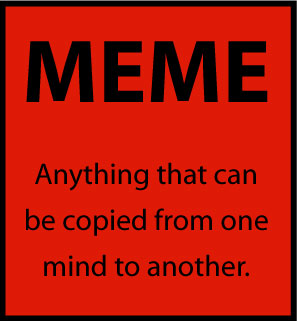
According to Dawkins, genes are replicators. DNA has existed millions of years ago and their function it to reproduce so that they can be passed on to other organisms. This is nature´s way of ensuring the life and survival of the organisms on the planet. Further on in his reading he mentioned another type of replicator that has appeared: the “meme.”  To summarize what he said, meme are the genes of culture. It´s is his way of explaining how one person takes in everything that is around him or her. This is something I strongly agree with. People are born with their unique genetic make-up that builds them up. During the years the traits start to appear and one can see the resemblance the off spring has with the parents that conceived him. As well as physical traits, some personality traits can also be inherited. After the genes comes the memes. Thanks to this replicator, humans are able to learn new languages, play an instrument, and learn a song. Also, the memes are the ones that enables someone to leave their mark on the planet. The whole world will always remember Leonardo Da Vinci for his sculpture “The David,” or Jose Mourihno for winning four major leagues in 4 different countries. This is all part of the human culture that memes replicate and make every body aware. Richard Dawkins also mentions that one-day memes will take over genes, but this is physically impossible. A replicator of culture cannot replace the replicator of life. With put genes, memes would not have work to do; they would not have culture to transmit because not life would exist. Genes will exist forever or until or the organisms become exist, because they are the building blocks of life. 

Sex: Reproduction or Pleasure?


In chapter 10, Dawkins explained the basic behavior of ants of bees that are part of the group of “social insects.” He gave a very thorough explanation of how this community of “social insects” functions. There are two types of insects, like two social classes. The most important is the queen and then there´s the workers. The role of the workers is to keep the community going and to satisfy the queen. (By satisfy I don´t mean like presents or massages, just feed her and keep her alive.) The role of the queen is to live and reproduce herself. One of the most interesting things is the way she reproduces herself. Instead of mating with a male each time she wants to reproduce, she does it only ones and stores the sperm of the mate, to be used further one. In this community of insects, sex is only used for reproduction. That is the main reason why insects and animal mate, with the exception of humans.  Even though the main purpose of sex in humans is also reproduction, many do it for pleasure. This is why condoms, anti-conceptive or many other prevention methods exist. Many happy couples of single people want to have sex in order to reproduce and have a baby but most of the people today, want to have sex in order to entertain themselves. I don´t know it that is a sign of intelligence or stupidity but people could argue both. A stronger believer in the first option would say that humans are more intelligent because they have discovered other things that sex can offer. A believer of the latter can argue and say that it is not an intelligent thing to do because thanks to unprotected sex and the wild imagination of humans many people have died. To make myself clear, through sex one can get many diseases that can end up killing a person. If the companion is not a known person, the stakes of this occurring are very high. Is it worth it risking one´s health for the “pleasure and entertainment” of one night? 

If We Inherited Traits...


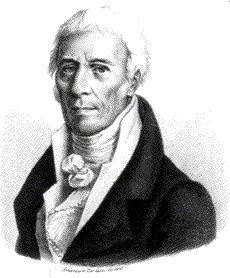
First I would like to start by giving the definition of the word “gene” just as Richard Dawkins described it in his book. He uses the definition of G.C Williams and it goes as follows: “any portion of chromosomal material that potentially last for enough generations to serve as a unit of natural selection. “  (Pg. 28) Genes are the ones that enable any organism to live, survive and evolve. They are one of the most important parts of natural selection, because without genes, nothing will be passed on. Now, what exactly do genes pass on? Dawkins mentions that” each new generation starts from scratch.“ (pg 23) By this we can conclude that Lamarck’s theory of inheritance of acquired traits is false. The genes carry physical characteristics such as hair or eye color, but what a human being acquires during his or her life time, is not passed on to the off springs. This does not happen in human or any other organism of the planet. But this is not news to anybody. Lamarck´s theory was disproven long ago by Darwin´s theory of evolution. Never the less it popped some questions in my head. What would happen if we did in fact inherit the traits that our parents acquired during their lifetime? In some cases this could be good, but in others it couldn´t. One clear example is the loss of a limb. Let´s say that a mother had an addiction to heroin, and one time, the needle that she used was infected and her arm had to be cut off. It would be very awful if the off spring had to suffer the consequences of the mother´s action and be born without an arm. In other cases, it would not be that tragic. For instance, let’s say that the father developed diabetes when he was young. Fortunately the doctors were able to cure him, but this is a disease that is inherited. It would be great that because the father was cured, then the off spring would not have the diseases. This would be a great consequence of inheritance of traits, but in my opinion, if this were to happen, much more negative traits would be inherited that positive. I really like that all the generations can start from scratch, because it give them the opportunity to build the life they want.  

Monday, May 7, 2012

The Survival of The Capable Replicators


In the second chapter of The Selfish Gene, Dawkins introduces genes as replicators. He based his explanation on an experiment that was conducted, where scientist created the environment they believe existed in earth, before life.  They put together water, carbon dioxide, methane and ammonia. Then they introduced an energy source such as electric sparks or ultraviolet light. These conditions may not be the ones found in earth pre-life, but it is was it seems like, so scientist used those. A few weeks after putting everything together, they observed that new molecules had been created, and laid in a small, liquid, muddy-like substance. Out of those molecules, the replicator, was the one that stood out, thanks to it´s special “power” of being able to replicate itself. He then goes on to tell how this replicator was the one that enabled other molecules to make more copies of them. Some of the copies were identical, but other were similar, because the replicator was bound to create mistakes.

When I hear the word mistake, it creates a negative connotation. But just as Dawkins explains, a mistake can happen for good. Even though some could argue that mistakes occur when something goes wrong, the result of it may be possible. This is exactly what happens when replicators make mistakes. The changes in those copies are the ones that make evolution possible, and with evolution come the survival of the species. This is all relates with Charles´s Darwin theory of natural selection and the survival of the fittest. The species-in this case molecules- that are capable of changing and adapting, are the ones that survive.

During the industrial era in the Unites States, (late 19th century) William Graham Summer popularized a philosophy that relates to Darwin´s “survival of the fittest.” It did not have to do with the survival or extinction of a species, but more of human beings as individuals. The philosophy was developed by Herbert Spencer, and is called “Social Darwinism.” It has the same base of “the survival of the fittest,” but it embarks the social society. The United States was going though an era of technological and economical advancements, where top gun guys, such as Andre Carnegie and John D. Rockefeller started to emerge. To justify the wide gap between the rich and the poor, many used Social Darwinism and argued that only the strongest are and should be able to over come the economic situations, and should not need assistance. In this way, the most capable people will survive, and will be the one to develop the economy and the country.

The survival of the best replicators is very similar to the survival of the most capable citizens. If both are able to survive, it is because they have fought for it and have proven to be the strongest. Hence, life or the country will have been left in charge of the ones that will not let it fail.